Menu
Download our Petland App today for information on your local Petland's Available Pets and Pet Supplies. All at the tips of your fingers!


Download our Petland App today for information on your local Petland's Available Pets and Pet Supplies. All at the tips of your fingers!
Please create a free account, or login by clicking here.
Petland Memphis, Tennessee
October 19, 2026
A four-month-old puppy has a worldview built entirely from the last eight weeks. The house looks a certain way. Four people live here. Dinner happens at six. Nothing much changes.
Then, over the course of one weekend, a seven-foot tree appears in the living room, every surface acquires objects that were not there before, and on Thursday eleven people arrive at once and stay for nine hours. By Saturday your previously settled puppy has stopped sleeping through the night, has started having accidents in a room they had stopped having accidents in, and is barking at the front door every forty minutes.
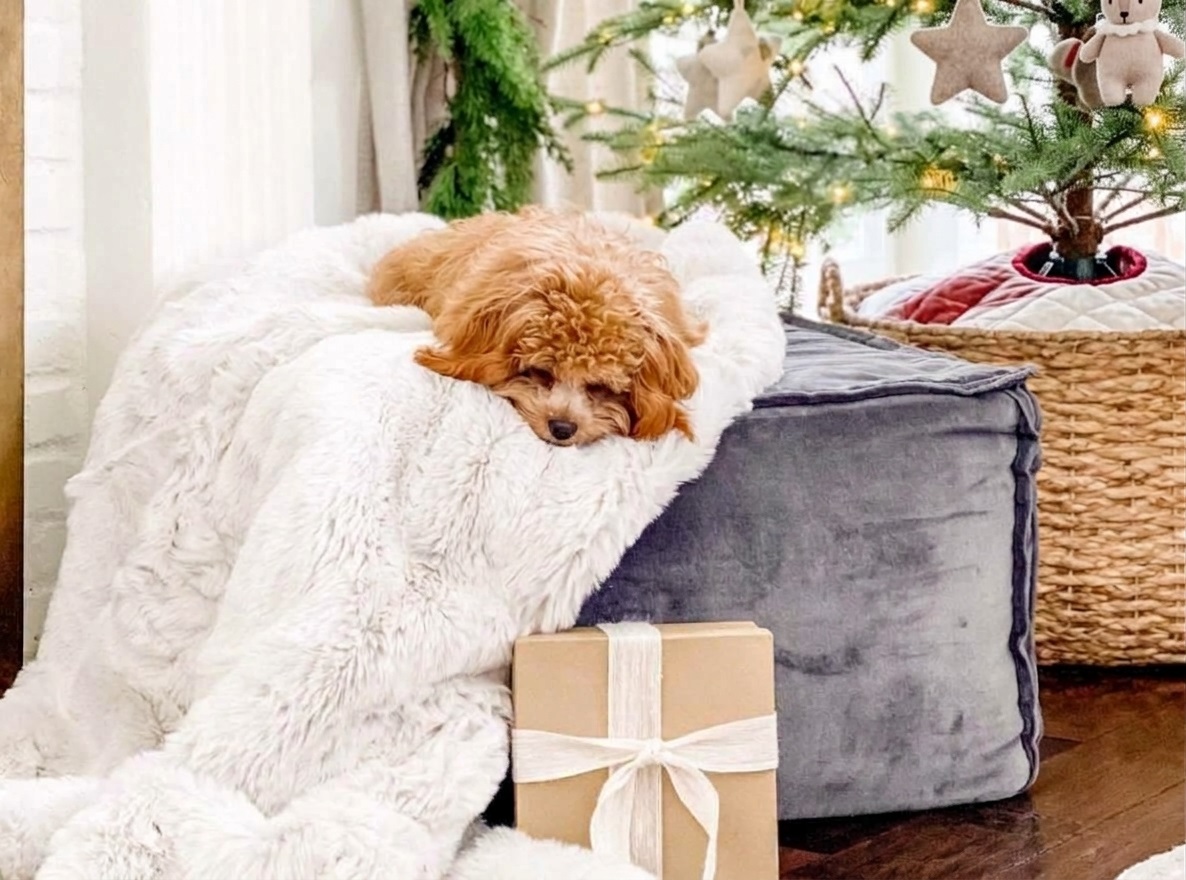
That is not a behavior problem. It is a routine problem, and a puppy first christmas is genuinely one of the harder weeks in a young dog’s first year.
The good news is that almost all of it is predictable, which means almost all of it is manageable. This guide covers the three things that go wrong, in order of how often they happen: visitors, decorations, and the quiet erosion of routine that nobody notices until it has already caused the first two to get worse.
Three things happen at once, and the combination matters more than any one of them.
Routine disappears. Meals shift later. Walks get skipped because someone is cooking. Bedtime moves by two hours. The puppy’s potty schedule, which was running on forty-five minute intervals, becomes whatever anyone remembers. For a dog whose entire sense of security comes from predictability, this is the biggest single stressor, and it is the one people are least likely to identify as a cause.
Stimulation spikes. Noise, new smells, unfamiliar people, children, doorbells, music, food on low tables. A puppy cannot filter any of it. What looks like excitement is usually a nervous system with no off switch, and an overstimulated puppy does not calm down on their own. They escalate.
Sleep gets stolen. This is the underrated one. A four-month-old puppy needs sixteen to eighteen hours of sleep a day. During a holiday gathering they might get eight, because every time they settle someone wants to hold them. An undersleeping puppy is a puppy who nips, barks, cannot focus, and has accidents. Nearly every holiday behavior complaint traces back to this.
Keep those three in mind and the rest of this guide is just implementation.
Most holiday puppy problems are visitor problems. Here is how to run it.
Send a message to whoever is coming. It can be short and friendly: we have a new puppy, here is what helps. Specifically:
That last one matters more than it sounds. Door dashing during holiday gatherings, with people coming and going and nobody tracking the puppy, is one of the most common ways a young dog gets lost in December.
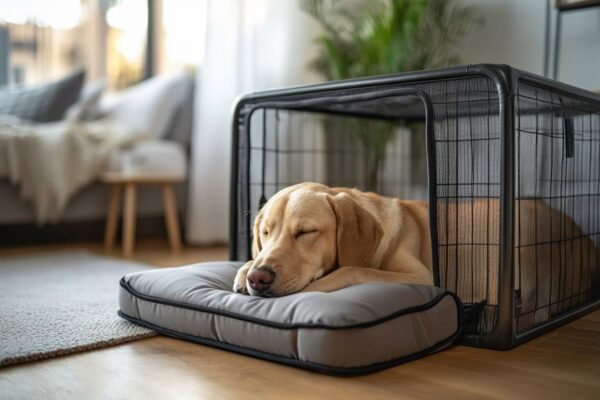
Set up a room or a gated area away from the main gathering, with the crate, water, a chew and something that smells like you. Not a closet, not a garage, and not the room where coats get piled. Somewhere genuinely quiet with a closed door.
This is where your puppy spends most of the gathering, and that is correct rather than cruel. A puppy who sleeps through two-thirds of a holiday dinner in a quiet bedroom is a puppy who is still functional on Friday.
Decide in advance: the puppy is out for twenty minutes at the start, goes to the quiet room for ninety, comes out for fifteen, goes back, and so on. Put someone specifically in charge of it. Without an assigned person it will not happen, because everyone will assume someone else is watching.
End every out-session while the puppy is still doing well. The moment you see the frantic running, the hard mouthing, or the inability to settle, you are already past the right stopping point.
Children and puppies are a genuinely good combination with supervision and a genuinely risky one without it. Give kids three rules: sit on the floor and let the puppy come to you, gentle hands, no chasing and no carrying. Then supervise anyway. Our guide to How to Introduce Young Children to a Puppy covers the fuller approach, and the holidays are exactly when it is most needed.
Not everything on the standard holiday hazard list is a real risk, and a few things that are rarely mentioned are.
Water in the tree stand is the hazard people forget. Stagnant tree water grows bacteria and often contains preservatives or fertilizer from the tree itself. A puppy will absolutely drink it. Cover the stand with a tree skirt that tucks underneath, or ring it with a physical barrier.
Tipping is a real risk with a puppy who pulls on low branches. Anchor the tree to the wall or ceiling with fishing line, which is invisible and takes five minutes.
Low ornaments. Leave the bottom three feet of the tree bare, or use only soft fabric ornaments there. Glass ornaments at puppy height will eventually come down, and broken glass plus a curious mouth is an emergency.
Pine needles. Mildly irritating if eaten in quantity and genuinely uncomfortable if a puppy swallows a cluster. Vacuum more than feels necessary.
The holidays multiply the number of cords in a house by about four, and they put them at floor level where they were not before. A chewing puppy and a live cord is a serious risk.
Run light strings behind furniture where possible, use cord covers on anything crossing open floor, and unplug everything when you leave the room or go to bed. Battery-operated candles instead of real ones, every time.
The seasonal plants worth knowing about:
Keep all of them above puppy reach or skip them entirely for one year.
Ribbon and string are the standout risk here. A puppy who swallows ribbon can develop a linear obstruction, which is a surgical emergency and genuinely dangerous. Keep ribbon, tinsel and string entirely away from floor level.
Wrapped gifts under the tree are an invitation. A puppy cannot distinguish a wrapped box of chocolates from a toy. Either keep gifts out of the room until the day, or gate the tree area.
| Food | Risk level | Why |
| Chocolate | High | Theobromine, worse in dark chocolate |
| Xylitol (sugar-free items) | Very high | Rapid blood sugar crash |
| Grapes and raisins | High | Kidney damage, no safe amount known |
| Onions, garlic, leeks | High | Damages red blood cells |
| Cooked bones | High | Splinter and cause perforation |
| Macadamia nuts | High | Neurological symptoms |
| Alcohol | High | Small amounts affect a small dog badly |
| Fatty trimmings and skin | Moderate to high | Pancreatitis, a common holiday emergency |
| Nutmeg | Moderate | Common in holiday baking |
| Bread dough, raw | Moderate to high | Expands and ferments in the stomach |
| Plain turkey, no skin or bone | Low | Fine in small amounts |
| Plain cooked sweet potato | Low | Fine in small amounts |
| Plain green beans, carrots | Low | Fine in small amounts |
Two notes on this table. The fatty trimmings line is the one that sends the most dogs to emergency clinics over the holidays, and it is almost always a well-meaning guest rather than deliberate. And the per-pound factor matters enormously: an amount of chocolate that would barely affect a seventy-pound dog is a serious dose for an eight-pound puppy.
Put a bowl of plain training treats on the counter and tell guests that is the only thing they may give the puppy. People want to feed a puppy, and redirecting that impulse works better than forbidding it.
This is the section that actually prevents the other problems, and it is the one most likely to get skipped.
Keep potty trips on schedule. Set phone alarms. Every forty-five to sixty minutes during a gathering, regardless of what else is happening. Assign a person. A holiday regression in potty training is almost always a missed-trips problem rather than a backslide.
Protect sleep. Enforce nap time whether the puppy seems to want it or not. A puppy who has been awake for four hours needs to be in their crate even if they are still bouncing. Especially if they are still bouncing.
Keep mealtimes fixed. Feed at the normal times with the normal food, even if human dinner is at nine. Changing diet and schedule simultaneously during a stressful week is how you end up cleaning carpets.
Keep one walk sacred. A single daily walk at roughly the same time, even a short one, anchors the whole day for a puppy. In Memphis, late December walks are usually comfortable, which makes this easier than it would be in July.
Hold bedtime. If bedtime is nine, it stays nine, with the crate in the same place. The one night you let a puppy stay up until midnight because the party ran long is the night the sleep schedule breaks.
Learning to settle amid activity is a skill worth building deliberately rather than hoping for, and Safe Ways to Teach a Puppy to Be Calm in Public Places covers the mat and settle work that transfers directly to a living room full of guests.
Three weeks out. Decorate gradually rather than all at once. Put the tree up bare, let the puppy get used to it for a few days, then add lights, then ornaments on the upper two-thirds. A puppy who meets the tree in stages treats it as furniture. A puppy who wakes up to a fully decorated tree treats it as a new toy.
Two weeks out. Start practicing the settle work and brief crate rest during household activity. Run a dry run: turn on music, move around, cook something, and have the puppy rest in their space through it.
One week out. Send the message to guests. Set up the decompression room so it is established rather than improvised. Buy the plain training treats.
Gathering day. Long walk and real exercise in the morning before anyone arrives. A tired puppy starts the day with a much higher tolerance. Then run the schedule.
The day after. Return fully to normal routine immediately. Puppies recover from a disrupted week quickly if the recovery starts promptly. Expect a day or two of extra sleep and slightly worse focus, both of which resolve.
Our guide to Is Your House Puppy Proof for the Holidays is a good companion piece for the physical safety walkthrough, which is worth doing before the decorations go up rather than after.
A puppy first christmas goes badly for predictable reasons and goes well for equally predictable ones. The puppies who come through the holidays unbothered are not calmer by temperament. They are the ones whose owners protected three things: sleep, the potty schedule, and a quiet room with a closed door.
Decorate in stages. Brief your guests before they arrive. Assign one person to the puppy’s schedule and let them enforce it without apology. Put a bowl of approved treats on the counter so the people who want to feed your puppy have somewhere harmless to direct that impulse. Then let your puppy sleep through most of the party, which is what they would choose anyway.
Bringing a puppy home before the holidays in the Memphis area? The team at Petland Memphis can help you think through the timing, including whether the week of a big gathering is the right week to bring a puppy home at all. Come see us, meet the puppies, and ask us anything.
Should I bring a new puppy home right before the holidays?
It is not ideal. A puppy’s first week needs quiet and predictability, and a holiday week offers neither. If you can, aim for at least two weeks before or a week after the main gathering, which gives the puppy time to settle before the household changes around them. If the timing is fixed, keep the puppy’s world as small and quiet as possible and delay introductions to extended family.
How long should my puppy be out during a holiday gathering?
Fifteen to twenty minutes at a time, with ninety minutes of rest between. That ratio sounds restrictive and it reflects what a four-month-old can actually process. End each session while the puppy is still doing well rather than waiting for the frantic running or hard mouthing that signals you are already past the limit.
What holiday foods are most dangerous for puppies?
Chocolate, anything containing xylitol, grapes and raisins, onions and garlic, cooked bones, and macadamia nuts are the serious ones. The most common cause of holiday emergency visits is actually fatty trimmings and turkey skin, which can trigger pancreatitis. Body weight matters a lot: an amount that barely affects a large dog is a real dose for a small puppy.
Is a Christmas tree safe around a puppy?
With precautions, yes. Anchor it to the wall so it cannot tip, cover the water in the stand because stagnant tree water is a genuine hazard, leave the bottom three feet bare or use soft fabric ornaments there, and keep ribbon and tinsel entirely away from floor level. Introducing the tree in stages, bare first then decorated, helps a puppy treat it as furniture rather than a toy.
My puppy started having accidents again during the holidays. Why?
Almost always missed potty trips rather than a genuine training regression. During a gathering, the forty-five to sixty minute schedule slips because everyone assumes someone else is handling it. Set phone alarms, assign one specific person, and return to the normal rhythm immediately afterward. Most puppies are back to normal within two or three days.
How do I stop guests from feeding my puppy table food?
Give them an alternative rather than a prohibition. Put a bowl of plain training treats on the counter and tell everyone that is the only thing the puppy may have. People want to feed a puppy, and redirecting the impulse works far better than asking them to resist it. Mention it in the message you send before they arrive, too.
Should my puppy be crated during the whole gathering?
Not the whole time, but most of it. Plan short supervised out-sessions and long rest periods in a genuinely quiet room with a closed door. A four-month-old puppy needs sixteen to eighteen hours of sleep daily, and during a holiday event they will get far less unless you protect it. That protected sleep is what keeps them functional the next day.