Menu
Download our Petland App today for information on your local Petland's Available Pets and Pet Supplies. All at the tips of your fingers!


Download our Petland App today for information on your local Petland's Available Pets and Pet Supplies. All at the tips of your fingers!
Please create a free account, or login by clicking here.
Petland Memphis, Tennessee
April 6, 2026
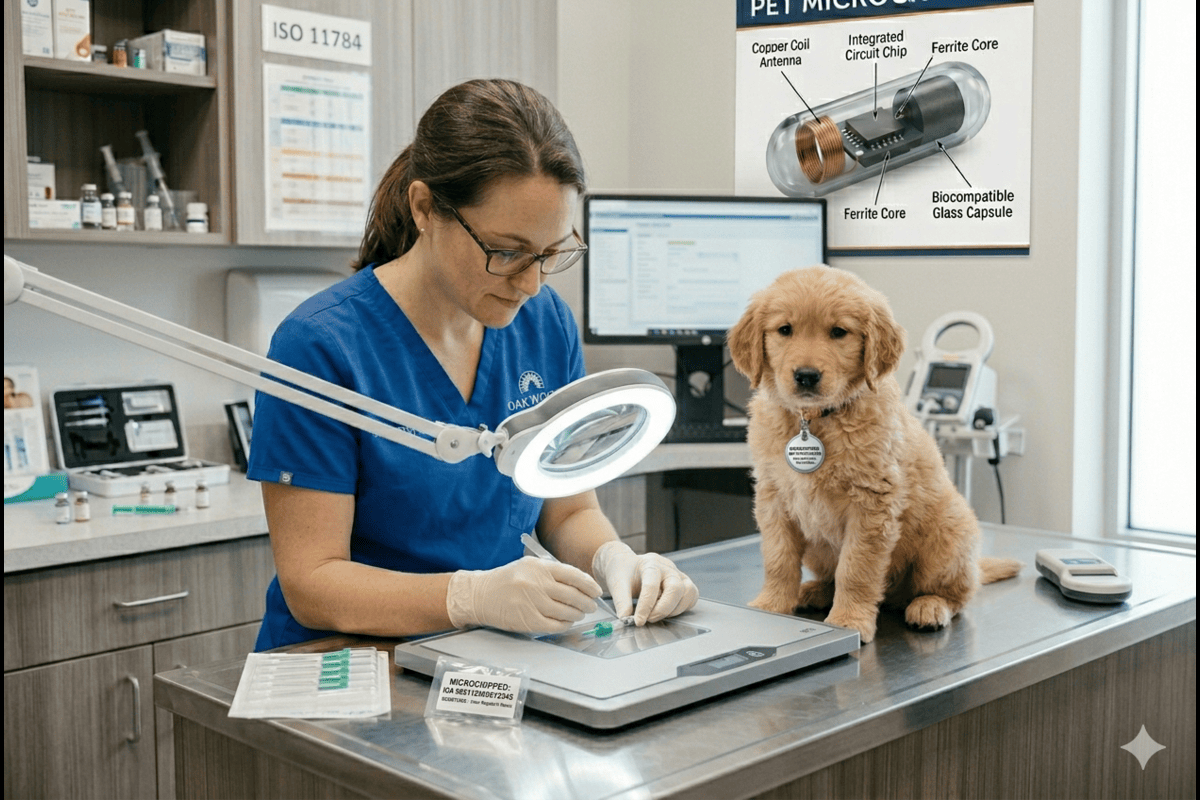
If you’ve ever worried about your pet getting lost, you’re not alone. Every pet owner has imagined that heart-dropping moment when their dog or cat slips out the door and disappears. That’s where pet microchipping steps in as a powerful safety solution. A microchip is a tiny electronic device, about the size of a grain of rice, that is implanted just under your pet’s skin—usually between the shoulder blades.
Unlike collars or tags that can fall off or be removed, a microchip stays with your pet for life. Think of it as a permanent ID card that cannot be lost. It doesn’t track your pet’s location in real time, but it stores a unique identification number linked to your contact details in a database. When a lost pet is found, veterinarians or animal shelters can scan the chip and instantly access the owner’s information.
The technology behind microchipping is surprisingly simple. Each chip contains a radio-frequency identification (RFID) number. When a scanner passes over the chip, it activates and transmits this number. That number is then used to look up the pet owner’s details in a registered database.
Contrary to popular belief, the microchip itself does not store personal information like your name or address. Instead, it holds a unique ID number. This number connects to a secure database where your contact details are stored. That’s why registration is just as important as implantation.
Losing a pet can be devastating. It’s not just about losing an animal—it’s about losing a family member. Pet microchipping significantly increases the chances of a safe reunion.
Studies show that microchipped pets are far more likely to be returned to their owners than those without chips. Dogs with microchips are returned at a much higher rate, and cats—who often roam further—benefit even more from this technology.
Collars and tags are useful, but they’re not foolproof. Pets can slip out of collars, and tags can wear out or become unreadable. A microchip, however, is permanent. It’s always there, quietly waiting to help bring your pet back home if needed.
Many pet owners hesitate because they don’t know what the procedure involves. The truth is, it’s quick, safe, and routine.
The process is similar to a vaccination. A veterinarian uses a sterile needle to insert the microchip under your pet’s skin. It takes only a few seconds and doesn’t require surgery or anesthesia in most cases. After insertion, the chip is scanned to ensure it’s working properly.
The discomfort is minimal—comparable to a standard injection. Most pets barely react, and any slight irritation fades quickly. When you weigh this tiny moment of discomfort against the lifelong protection it offers, it becomes an easy decision.
Microchipping offers a wide range of benefits that go beyond simple identification.
Your pet gains an added layer of security. Even if someone finds your pet far from home, the microchip serves as a direct link back to you. It’s like giving your pet a voice that says, “I belong to someone—please help me get back.”
In many countries, microchipping is required for pet travel or ownership. Airlines, border authorities, and veterinary services often require pets to be microchipped as part of identification protocols. This makes it essential for anyone planning to travel with their furry companion.
This is where microchipping truly proves its value. When a lost pet is found, the recovery process becomes much smoother.
Animal shelters and veterinary clinics are equipped with scanners. When a stray pet is brought in, one of the first steps is to scan for a microchip. If a chip is detected, they retrieve the ID number and contact the database to find the owner’s details.
This process can take minutes, which means faster reunions and less stress for both the pet and the owner.
There are countless stories of pets being reunited with their families thanks to microchips—even after months or years. Some pets have traveled hundreds of miles before being found and returned. Without a microchip, these happy endings might never have happened.
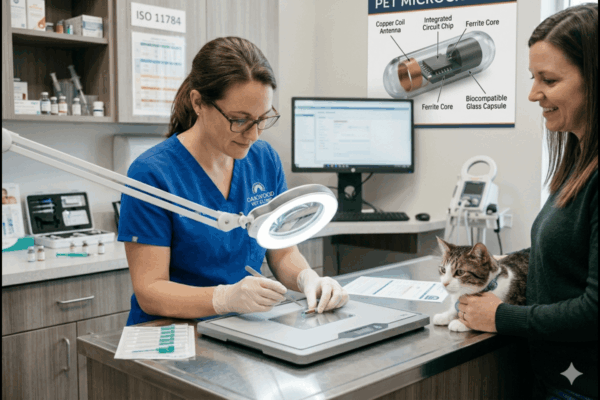
Many pet owners wonder whether microchipping is enough or if they should also invest in GPS tracking.
The best approach is to use both. A microchip ensures permanent identification, while a GPS tracker helps you locate your pet in real time. Together, they create a powerful safety system.
There’s a lot of misinformation about microchipping, which can make pet owners hesitant.
Some people think microchips act like GPS trackers—this isn’t true. Others worry about health risks, but microchips are widely considered safe and have been used for decades. Another common myth is that once implanted, the job is done. In reality, keeping your contact information updated is crucial.
Implanting a microchip is only half the job. Registration is what makes it effective.
When you register your pet’s microchip, your contact details are linked to the chip’s ID number. If you move, change your phone number, or transfer ownership, you must update the information. Otherwise, the microchip becomes useless in an emergency.
Think of it like a phone number saved in a contact list—if the number changes and isn’t updated, the connection is lost.
One of the biggest advantages of microchipping is its affordability.
Microchipping is typically a one-time, low-cost procedure. Many animal shelters and clinics offer it at discounted rates or even for free during special campaigns. Considering the lifelong benefits, it’s a small investment that can save you from emotional distress and potential search costs in the future.
Pet microchipping is one of the simplest yet most effective ways to protect your furry companion. It doesn’t require maintenance, doesn’t wear out, and works silently in the background to ensure your pet always has a way back home. While it may seem like a small step, it can make a life-changing difference when it matters most.
Combining microchipping with responsible pet ownership—like supervision, proper fencing, and ID tags—creates a comprehensive safety net. If you truly care about your pet’s well-being, microchipping isn’t just an option; it’s a necessity.
No, microchips do not provide real-time tracking. They only store an identification number that helps reunite lost pets with their owners.
Microchips are designed to last for your pet’s entire lifetime without needing replacement.
It is very rare. Microchips are designed to stay in place and function reliably for years.
Pets can usually be microchipped as early as 6–8 weeks old, depending on veterinary guidelines.
Yes, a collar with an ID tag provides immediate identification, while a microchip serves as a backup.








Bringing home a new pet is an exciting milestone, but choosing where to find your furry family member can be challenging. Petland has established itself as a reliable and compas...

That adorable puppy isn’t just cute; it’s a complex creature needing specific things — understanding what makes a puppy thrive is key to their happiness and de...
So, you’re thinking about getting a puppy from Petland? Get ready because you’re not just taking home a bundle of furry joy. You’re also getting a full-on star...

Bringing home a new puppy is like adding a little tornado of energy to your life. They zoom around, chew on everything, and look at you with those big, eager eyes that say, R...